20 Recommended Ways For Deciding On Anti-Termite Services In Jakarta
Wiki Article
Post-Construction Anti-Termite Barriers To Jakarta
Most Jakartans believe that termite barriers should be put in place prior to installing concrete or building walls. This is a false belief that can be costly. Property owners believe that the only way to secure their slabs is by chemical trenching. Terminicide is used repeatedly and degrades because of Jakarta's alkaline ground and high humidity. This belief has become obsolete due to the development of retrofit barrier systems. These are installed through perimeter excavations which mechanically connect to foundations that are already in place. Post-construction barriers are a great way to protect the site before construction. Both types of technology have distinct performance characteristics. Jakarta anti termite solutions that cannot offer both are barred from the fastest-growing segment of the market for urban insect control.
1. There are physical barriers that can be retrofitted
Installing stainless steel mesh, bonded sand granules and polymer membranes impregnated with slow-release termiticides against existing foundations is a possibility. The procedure requires excavation of the perimeter and excavation of the soil, barrier construction and mechanical fixation to the wall of the foundation. It's expensive, disruptive and long-lasting. Jakarta exterminators who tell clients they have only one option, annual liquid injections are misrepresenting the technology available.
2. Liquid Barriers Degrade; Physical Barriers Do Not
Soil-applied termiticides in Jakarta are prone to rapid hydrolysis. High temperatures, pH alkaline and heavy rainfalls during the rainy season cut the half-life time of the active ingredient by a few months. Physical barriers, like sheets, mesh, and graded stones, do not diminish in value. Their performance for exclusion on year ten is identical to the year one. Chemical barriers are not as efficient for customers who want to spend more money on the long-term.
3. It's not advertised, but moisture suppression has the benefit of being a secret benefit
The sheet of polymer barrier also wards off termites as well as preventing capillary moist transfer from soil to bricks. Drier foundations mean drier timber. Drier wood is indetectable. Termites are not able to attack anything they cannot detect. Companies that provide physical retrofits are able to offer two interventions at the same time for a single price.
4. Partial Perimeter Is Not a Barrier
Jakarta's dense urbanization --party walls along with adjacent structures, roads, and other structures often make full perimeter excavation impossible. Services that provide partial installation for "barriers" do not accurately represent the subterranean bypass. The termites are able to walk around open ends. It is appropriate to call the process "partial perimeter intervention" with gap exclusions documented. Homeowners must be aware of what gaps remain unprotected.
5. Bekasi Adoption Signal
The sprawling metropolis of Jakarta has already embraced physical retrofits. Early adopters aren't located in Menteng or Kebayoran They are located in Bekasi which is where greenfield development creates open areas and coordinates construction sequences. Jakarta exterminators may overlook the trend if concentrate on only the central Jakarta tenders. Physical barriers are adopted in the towns of secondary importance and then moves to the north.
6. The Architect's Specification is more important than the Substitution of Contractors
Emporio Architect (and similar firms) are now defining a physical barriers in their renovation plans. Anti-termite companies are contractors in the value chain. They do not control the specification. To shift sales from homeowners towards architectural companies, structural engineers and pest control companies need to shift their strategy. Transaction economics refers to selling the retrofit of a house. Annuity economics is the method of becoming defined in the architect's master specification.
7. The Additive Decay Curve favors Infused Chemicals
Liquid Termiticides applied to soil are Surface-Deposited and Degraded from Day One. Polymer sheets barriers contain additives that were infused into the matrix prior to its manufacture. The depletion happens on the exposed edges following a diffusion pattern measured in years. Physical barriers' warranty periods are actuarially justified. Five-year warranties on liquid barriers are speculative.
8. Access to the Excavation Determines Efficacy
Budget is not the only limitation on post-construction barrier installation. Access to the bucket. Mini excavators require around sixty centimeters clear work space in the area adjacent to the foundation. Geometrically ineligible are properties with zero-lot lines, shared drives or hardscapes which are tightly attached on the walls. Access audits have to be conducted by anti-termite services providers prior to when they can quote, and not in the course of mobilization.
9. ESG reports create commercial demand
Multinational tenants as well as green building certification candidates, and Indonesian corporations that have sustainability goals are now tracking embedded carbon emissions. Broadcast spraying with liquid termiticides is known as a cause CO2 emissions. Physical barrier installation--one-time excavation, mechanical fastening, zero recurrent chemical application--qualifies as emissions reduction. Jakarta exterminators serving corporate clients must provide carbon-equivalent information or risk losing bids to competitors who do.
10. Retrofit barriers need different warranties
Pre-construction barriers are guaranteed against termite penetrating the barrier plane. Post-construction barriers aren't covered by this warranty since they only cover the visible portion of the structure. The warranty's clause should be "exclusion of the affected zone" not "protection against damage to the entire structure." Homeowners who are misled into believing that they are protected have been fooled. Exterminators who document exactly what was installed and what is still insecure will be more likely to settle claims disputes and keep their customers.
The Conclusion
Three trends are convergent in Jakarta The documented decline rate of chemical termiticides applied to soil that are used in tropical urban settings, architect-led specifications of permanent physical barriers, and the corporate demand to use pest control techniques compatible with carbon accounting frameworks. Market share is not protected by anti-termite services who frame post-construction barriers as chemical trenching. Instead, they protect the risk of obsolescence. The equipment required--mini-excavators, core drills, mechanical fasteners--is capital-intensive but one-time. The required training--soil assessments, access auditing, warranty documentation knowledge-intensive but transferable. Bekasi is now the entry point to the new barrier era. Within 24 months it will reach Jakarta. Exterminators who wait for client demand to materialize before acquiring capabilities will be two years behind the early adopters, and will be competing against established barrier contractors with references and architect connections. It's not a decision about the need to upgrade retrofit capabilities. The choice is whether to be the leader in this market or follow it. View the most popular jasa pembasmi rayap for blog examples including membasmi rayap, penyebab rayap, bahan lemari anti rayap, harga anti rayap, cara membasmi rayap di lemari, kayu anti rayap, rayap kecil, anti rayap terbaik, jasa pengendalian hama, jasa anti rayap surabaya and more.
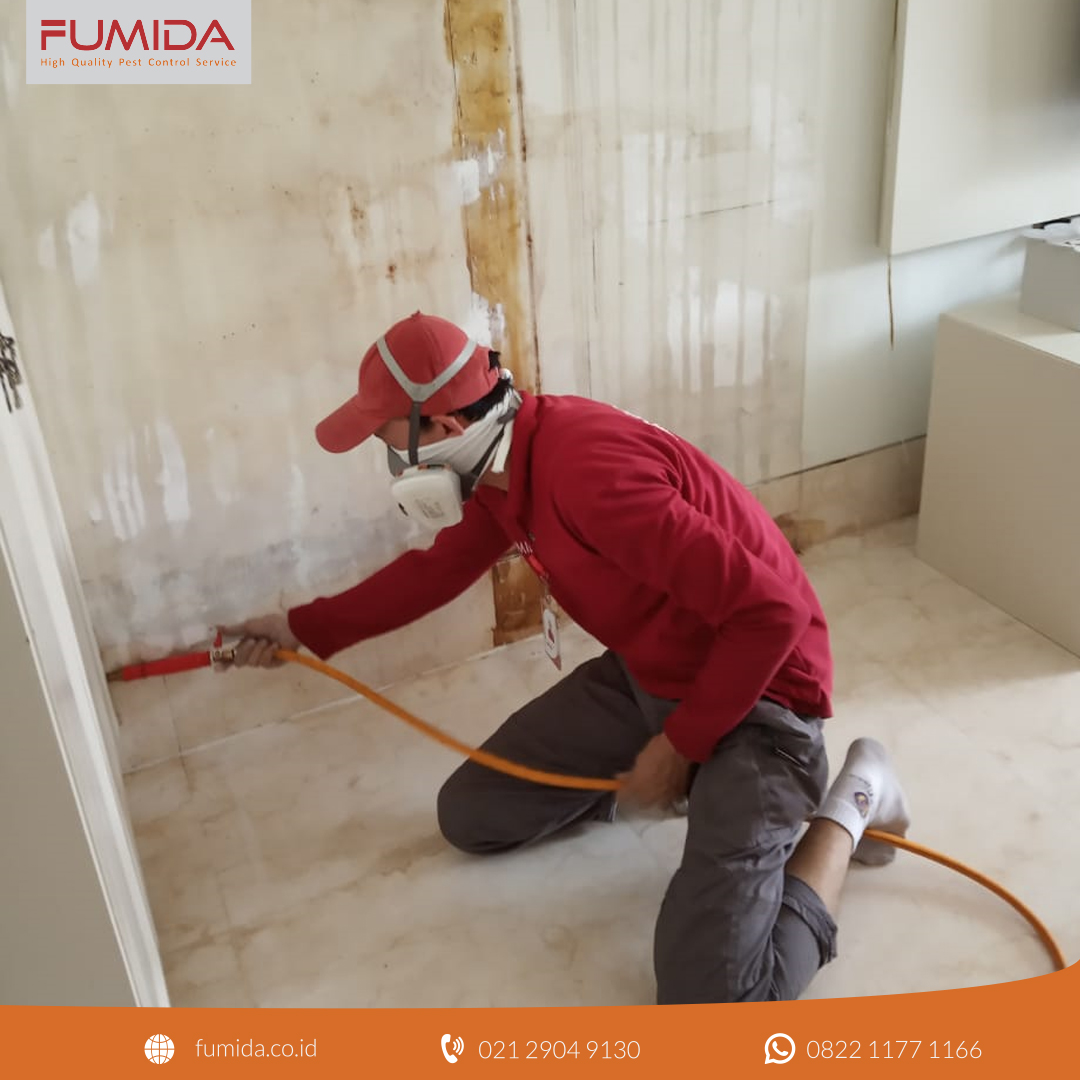
Alternatives To Termite Fumigation For Indonesian Villas, Such As Jakarta
Indonesian home owners have been trained to think tent fumigation is the only answer when termites invade wall areas or embedding timbers. Fumigation companies promote this idea. The fear of home owners also contribute to it. The tent descends and the neighbors complain that the family has to leave for 3 days and then the colony inside dies. The colony in the garden, unaffected by gas, constructs the foraging tunnels and returns to the structure in just 18 months. Fumigation sterilizes buildings but doesn't affect the landscape reservoirs. The Jakarta anti-termite firms that support the villa industry provide an alternative that is not for charity but to get an advantage in the market. Clients with eight-bedroom estates in Pondok Indah or a vacation compound in Puncak don't want the hassle of tenting. They do not want to view the colony being evacuated, or be sure of an outbreak.
1. Fumigation kills termites inside, Baiting Kills the Colony
Tent fumigation releases lethal levels of gas into each empty space in the building. The termites in the structure are all eliminated. The colony living in the soil under the garden, driveway or on the neighbor's property doesn't end up dying. Trophallaxis is a mechanism through the toxicant is delivered through baiting the colony's nucleus. The colony is killed. The structure becomes reinfestation-resistant because the source population is eliminated. The majority of homeowners who are aware of this distinction will rarely opt for fumigation more than once.
2. Heat Treatment is able to penetrate into areas that gas cannot reach.
Whole-structure heat treatment raises internal timber temperature to fifty degrees Celsius sustained for one hour. The treatment is effective in killing all forms of life, even eggs. There is no need for tenting and there are no chemical residues. Heat treatment is ideal for Indonesian Villas with exposed beams construction, intricate carvings and heritage timber. The equipment is already in place. The equipment is in place. The homeowner needs to be aware of all options.
3. Electro-Gun Technology for Localized Infestations
High-frequency microwave devices emit radiation that triggers water molecules within wood, creating lethal heat in specific regions of infestation, without impacting the other materials. Electro-gun treatment is an effective way to eliminate termites from a single wooden door frame or roof truss. This is not experimental and is a standard technology that Jakarta exterminators have decided not to import.
4. Wood Injection Systems Preserve Architectural Fabric
The termites will be unable to eat the timber for a long time if the liquid borate formulas are injected with pressure. The holes for drilling were smaller than existing nails holes. The carvings are still intact. The door frame is still in its original position. Indonesian villa owners frequently refuse this treatment because exterminators propose it after they have already suggested replacement. When offered before replacement is accepted.
5. Above-Ground Baiting for Hidden Cavity Colonies
When Coptotermes gestroi creates an aerial carton nest inside the wall cavity or roof voids, tent fumigation has been the standard procedure. The bait stations above ground that are encased in the active mud tubes that rise from the baseboards and ceiling corners, deliver the toxicant directly to nest populations. The colony feeds on its own employees while they go back to the tube. There is no tent. No evacuation. No evacuation.
6. Nitrogen Freezing for Small-Scale Heritage Components
Termites that live in wood are killed quickly when liquid nitrogen is circulated through the wood. The freeze process is followed by thaw, after which it repeats. Cryogenics are used rather than chemicals. Nitrogen freezing can keep the patina of high-end museum Javanese carvings or furniture. Treatment with heat or injection could darken it.
7. Installing a barrier that is physically anchored to stop reinfestation
Renting temporary sterility means renting a villa that fumigates without the need to install any physical barriers. The excavation along the perimeter of stainless steel mesh and polymer sheet prevents termites beneath ground from reentering the structure. The most effective methods of fumigation are those that incorporate permanent exclusion infrastructure. Sell the combination. Eliminate the active colony by baiting, then put in an enclosure to ensure that it is the sole colony that will ever live in the structure.
8. Carbon Dioxide Purging for Enclosed Spaces
When introduced to sealed crawlspaces or attic spaces, carbon dioxide displaces oxygen in them, which causes termites to die. The tenting of the structure is required only for partial protection. CO2 is quickly dispersed, leaves no residues, and poses a minimum danger to the occupants of the building, if guidelines for reentry are adhered to. The fumigation of Indonesian villas is unnecessary when termite activity on roof structures is minimal.
9. The timeline of Baiting must be made public upstream
The termites can be killed by fumigation within 72 hours. Baiting eliminates colonies within six to eight weeks. Villa owners who have used tenting won't take baiting seriously if the timing is revealed after mobilization. The timeframe, if revealed prior to contract execution, can be accepted as a cost to avoid the need for evacuation. Jakarta antitermite service that hides the baiting time period up to proposal is delivered are creating their own closing rate issues.
10. The Reservoir Colony must be Identified.
In Jakarta the entire city is within a few yards of at least one colony regardless of whether it is a park, an undeveloped cemetery, or even a rural zone. Fumigation does not consider this colony. This colony is also ignored through heat treatment, injection, and baiting except when they are used beyond the perimeter of the building. Landscape baiting grids are an effective fumigation option which targets the colony outside that could re-infest your villa in 18 months. If the exterminators only treat the structure, they are not delivering a long-lasting solution.
Conclusion
Indonesian Villa owners are not keen on having their homes evacuated. They do not wish to see tenting equipment set up in their well-maintained lawns. They don't want neighbors asking if their property infested. What they really want is to eliminate the colony, and to have the certainty that the colony will never return. Fumigation can achieve the first goal with a high degree of accuracy but fails to accomplish the second. When used in conjunction with other protocols and not as competing alternatives these methods can be deployed to achieve both goals: baiting thermal treatments, microwave technologies, wood injections, nitrogen freezing carbon dioxide purging physical barrier retrofits, etc. Jakarta anti-termite service providers who claim to be alternative fumigation service providers using multiple elimination methods, educating technicians on specific protocols for each species, and logging the outcomes of measures to prevent reinfestationthey will be able to capture the top villa sector that is currently being held in contracting tents. The equipment investment is huge. The investment in the training continues. Demand is already high. Villa owners are searching for "fumigation alternative Jakarta" every day. What is the question? Which exterminators have alternative protocols with documentation and credibility, while others will still default to tents in the search engine results? Read the best anti rayap jakarta for site info including rayap adalah, anti rayap, penyebab rayap, anti rayap untuk kayu, jasa basmi hama, cara membasmi rayap kayu, jasa anti rayap tangerang, cara basmi rayap, rumah rayap, jasa basmi hama and more.
